Janoshik test report: how to read one, and how to verify it
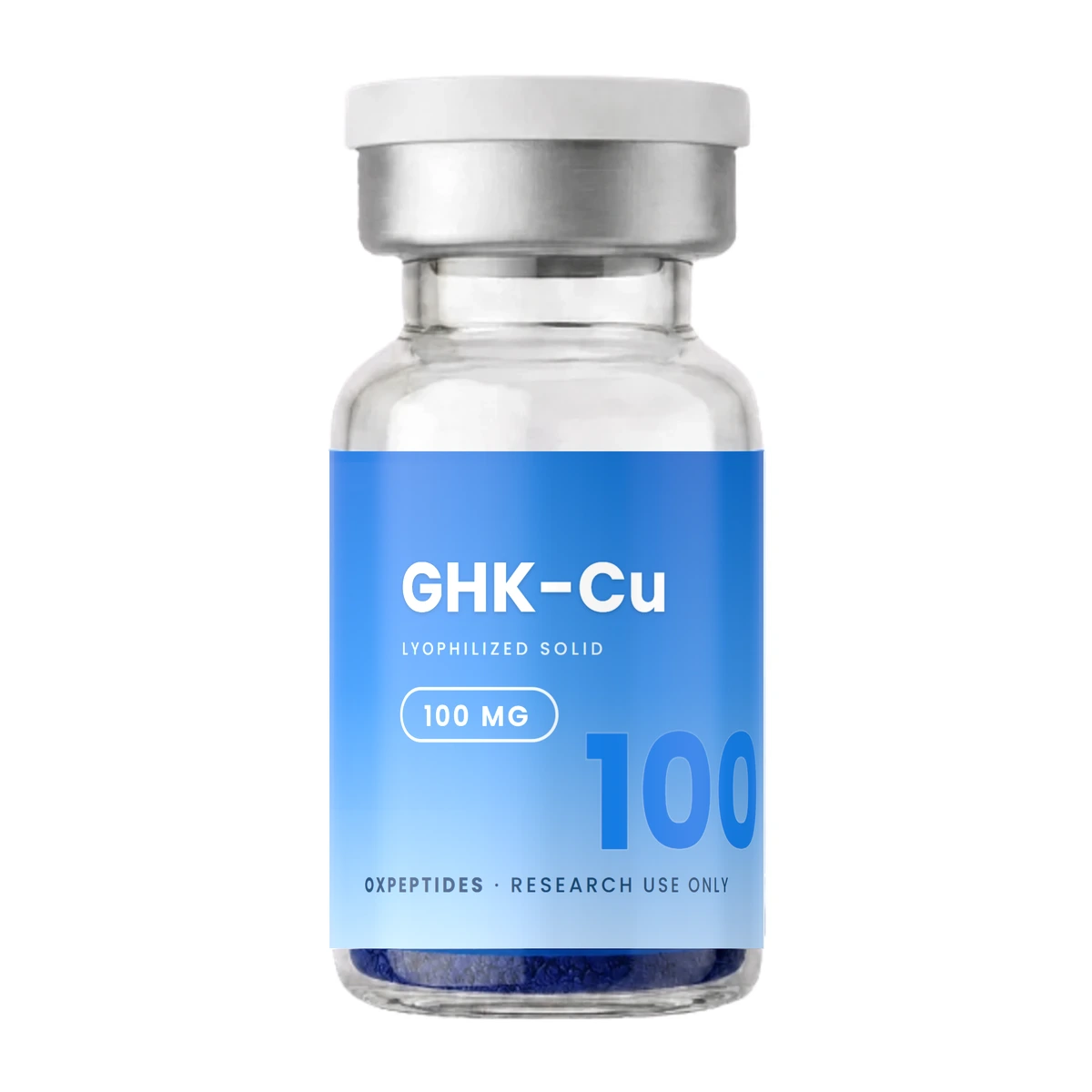
In the catalog
GHK‑Cu
from $32
Purity >99% by HPLC — measured value on each lot's COA
| Size | Subscription | One-time | Per mg |
|---|---|---|---|
| 50 mg | $32 | $32 | $0.64/mg |
Research use only. Not for human or veterinary use. Availability is on the product page.
A Janoshik test report is a one-page laboratory document stating the identity of a submitted sample, its purity by reverse-phase HPLC, its mass by mass spectrometry, often its net peptide content, together with a test number, a date and a photograph of the submitted vial. The number at the top can be looked up on the laboratory own site, which is what separates a report from an image of a report.
What Janoshik Analytical is, and why its page became the standard
Janoshik Analytical is an independent analytical laboratory in the Czech Republic that accepts samples from anyone and returns a one-page report. It has no stake in any catalogue.
Over the last few years it became the address peptide suppliers send their lots to, for two plain reasons: it accepts small submissions, and it publishes each report at a stable address, so a buyer can check the document without going through the supplier.
That second point is the whole argument.
A certificate that exists only as a JPEG on a shop page proves nothing, because a JPEG can be edited in a minute.
A report that carries a number the laboratory itself will confirm is a different object: to forge it you would have to forge the laboratory.
Janoshik is not the only laboratory doing this work.
Freedom Diagnostics, Colmaric Analyticals and ILS run comparable programmes, and a large manufacturer will often hold an in-house certificate as well.
The reading method below applies to all of them; the field names move, the questions do not.
The page, field by field
A report is short on purpose. Every line is a fact that can be checked, and a line that is missing is a fact nobody wanted to state.
| Field | What it says | What a missing value means |
|---|---|---|
| Test number | The identifier of this submission at the laboratory. The key to the online lookup. | Without it the page cannot be checked. Read it as an illustration. |
| Date | When the sample was analysed. | An undated page can be four years old. |
| Sample name | What the submitter declared. The laboratory reports it, it does not certify it. | — |
| Lot / batch | The production run the sample came from. Must match the number printed on the vial in hand. | A report without a lot cannot be tied to anything you received. |
| Purity | The area of the main peak against total peak area on the HPLC trace, in per cent. | — |
| Mass | The measured molecular mass, to be compared with the theoretical mass of the sequence. | Purity alone tells you the sample is one clean compound, not which one. |
| Peptide content | How much of the weighed powder is peptide rather than counter-ion and water. | The most commonly omitted figure, and the one that costs the most money. |
| Photograph | The submitted vial, wearing its label. | A bare vial was submitted by a manufacturer and says nothing about a finished product. |
The field-by-field reading of a full certificate, including the fields Janoshik does not carry, is in how to read a peptide COA.
The three measurements, and what each one settles
Reverse-phase HPLC: how clean
The sample is dissolved, pushed through a column and detected by UV at 214 nm, the wavelength of the peptide bond.
Each compound leaves the column at its own time and draws a peak. Purity is the area of the main peak divided by the area of everything that appeared, expressed as a percentage.
What this settles: the sample is one compound rather than a mixture. What it does not settle: which compound.
A 99.4 % figure on a vial of the wrong peptide is a very clean vial of the wrong peptide. The arithmetic behind the percentage, and why 99 % is a weaker claim than it sounds, is in what 99 % purity actually means.
Mass spectrometry: which molecule
The dissolved sample is ionized and its mass measured. That measured mass is compared with the mass computed from the declared sequence.
A GHK‑Cu sample must answer near 340.4 for the free tripeptide; a TB‑500 sample near 889.0; a 15-residue BPC‑157 sample near 1,419.5.
A difference of one residue shows up immediately, and so does a sequence built in the wrong order only if the laboratory also runs a sequencing step, which a standard report does not.
What this settles: identity, to the nearest mass. What it does not settle: stereochemistry, or two sequences that happen to share a mass.
Net peptide content: how much you actually bought
A lyophilized peptide is an acetate salt and carries residual water. A vial filled with 10 mg of powder typically holds 8 to 9 mg of peptide.
Net content, measured by amino-acid analysis or by nitrogen determination, states that figure.
A laboratory computing a concentration divides by it rather than by the label, which is why the bacteriostatic water calculator ends with a caveat about the label mass.
A report that gives purity and mass but not net content is still a real report. It simply leaves the most expensive question open.
Verify a report in under a minute
Four steps, and none of them require trusting the shop page the document was found on.
- Read the test number at the top of the page, and type it into the laboratory own lookup rather than clicking a link on the shop page. A link can point anywhere; an address typed by hand cannot.
- Compare what comes back with the page you were shown: the same compound, the same date, the same purity figure. A number that opens a different document, or nothing at all, ends the conversation.
- Match the lot on the report against the lot printed on the vial in hand. This is the step almost nobody does, and it is the one a re-used certificate cannot survive.
- Look at the photograph. If the vial in the picture wears the supplier label and the same lot, the document describes the finished product. A bare vial, or a label from another brand, describes something else.
Where a supplier publishes the report matters as much as whether it has one.
A certificate on the product page, dated, with a lot number, beats a promise to send one on request every time. OXpeptides publishes them per lot in the COA library and on each product page the day they come back.
Five ways a genuine report is made to say something it does not
Outright forgery is rare, because it is easy to catch. What circulates instead is real documents used dishonestly.
- The manufacturer certificate. A genuine report on a bare vial, submitted by the factory, shown as though it described the reseller finished product. Recognised by the photograph: no label, or a label in another alphabet.
- The frozen certificate. One report from 2023 still on the page in 2026, under four different lots. Recognised by the date, and by a lot number that never changes.
- The cropped page. The purity figure kept, the test number and the sample name cropped away. Recognised by what is missing.
- The good-lot submission. A supplier submits the cleanest vial of a run and sells the rest. Nothing on the page reveals this, which is why a certificate per lot, not per product, is the thing to ask for.
- The average on a blend. A four-peptide vial reported as a single purity figure. A blend must carry one figure per component, one peak per component. The case of the KLOW blend shows what a correct blend report looks like.
What a laboratory report does not prove
A report is a statement about one sample on one day. Reading it as a statement about a company is where buyers get hurt.
- It says nothing about the next lot. Purity is a property of a production run, not of a brand. A supplier who published a fine report in March owes you a fresh one for the vial shipped in September.
- It says nothing about storage or shipping. A sealed lyophilized vial is stable, and a report issued before a summer in a warehouse describes the powder as it was, not as it is. The storage rules are in lyophilized peptides: storage and shelf life.
- It says nothing about sterility or endotoxin. Those are separate analyses, ordered separately, and a purity report does not include them.
- It says nothing about anything living. A purity figure is chemistry. Research use only. Not for human or veterinary use.
What OXpeptides publishes, and what it does not claim
Every lot goes to an independent third-party laboratory.
The certificate is published in the COA library and on the product page the day it comes back, with the lot number, the purity figure and the date.
Until a lot has been analysed, the entry reads analysis pending, never an estimate and never a figure borrowed from a previous run.
The catalogue does not name the laboratory on a page before a signed report exists to name it on, which is the same rule applied to purity: the product pages carry the specification (>99 % by HPLC) and the measured figure lives on the certificate.
The copper tripeptide sold in 100, 200 and 300 mg sizes is on the GHK‑Cu page; the seven-point method for judging any supplier, certificate included, is in how to check a peptide supplier.
FAQ
What is a Janoshik test report?
How do I verify a Janoshik report?
Does a high purity figure mean the vial holds the right peptide?
What is net peptide content, and why is it missing so often?
Is a certificate on a supplier page enough?
Are there other laboratories besides Janoshik?
Related guides
How to read a peptide COA
What each field must say, how to verify it on the laboratory site, the signs of an edited certificate.
Read Quality & storagePurity: what "99 %" HPLC means
What the HPLC measures, why 99 % is not 99 mg in a 100 mg vial, why a percentage needs a chromatogram.
Read Quality & storageHow to check a peptide supplier
Lot number on the vial, a COA per lot, HPLC and MS, a named lab, the shipping origin, RUO: seven checks.
ReadNext step
GHK‑Cu in the OXpeptides catalog
Sizes, price per vial, the batch COA and current availability are on the product page.
See GHK‑Cu in the catalogResearch use only. Not for human or veterinary use.