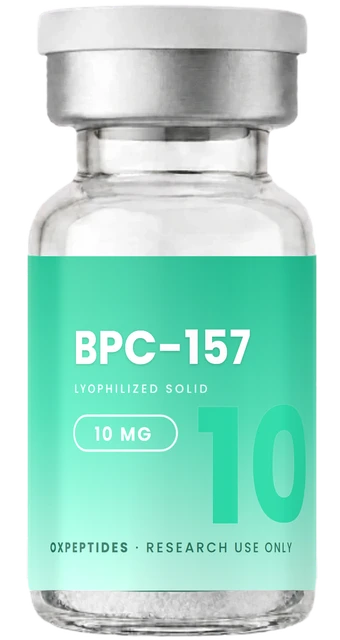
BPC-157 peptide
Buy BPC-157 for €54.90
Janoshik report in progress10 mgIn stock
30-day returns
Changed your mind? Return sealed vials within 30 days for a full refund.
Details in the refund policy.
- Ships to Ireland · 4–6 business days€9.90 shipping
- Sealed packagingstandard carton · sealed, cold-packed
Research use only. Not for human or veterinary use. Not evaluated by any health authority (EMA or other). Not intended to diagnose, treat, cure or prevent any disease.
€65.10 more for free shipping (from €120 after discounts).Add Retatrutide 10 mg (€89.90) → free shipping
More ways to save — the add-ons, at your plan price
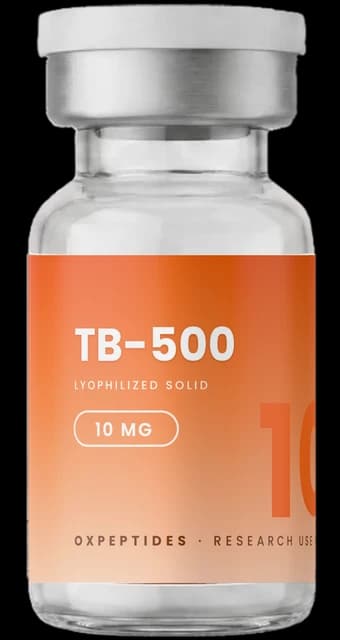
Add TB-500 10 mg · +€76.90
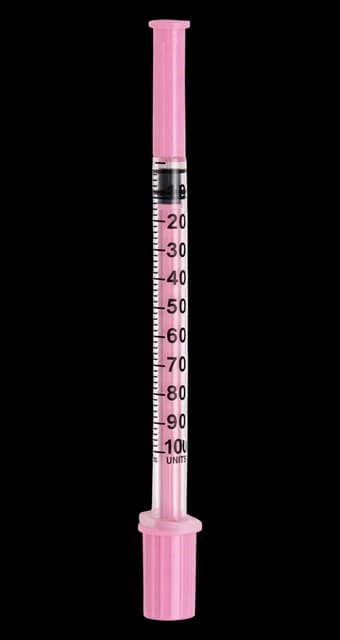
Add Pink Syringes 1 mL 30 pcs · +€26.90
After you order
Order timeline, step by step
Next
Packed
Sealed vials, cold-packed.
Then
Shipped
tracked, from the EU
Handed to the carrier. The tracking link lands in your inbox.
Estimated
Delivered
4–6 business days
At your door, in a standard sealed carton.
If nothing moves for 48 hours, reply to your confirmation e-mail: a person reads it and chases the carrier for you.
Refund policy →OXpeptides vs others
OXpeptidesOthersSpecifications
BPC-157 is a synthetic 15-amino-acid peptide fragment (pentadecapeptide) studied in laboratory research. OXpeptides supplies it lyophilized in sealed 10, 20 and 30 mg vials, HPLC purity above 99%; the Janoshik report per size is being run. Delivery across Europe takes 4-6 business days. It is offered in 3 sizes: 10 mg (€54.90), 20 mg (€94.90), 30 mg (€129.90).
How to read the lab report and check it yourself: Janoshik test report.
Purity spec
>99% HPLC
Temperature
−20 °C, sealed (short term ≤ 4 weeks: 2 to 8 °C)
Shelf life
24 months (lyophilized, sealed)
Keep sealed, protected from light and moisture
In the literature
BPC-157 is a synthetic pentadecapeptide (15 amino acids, sequence Gly-Glu-Pro-Pro-Pro-Gly-Lys-Pro-Ala-Asp-Asp-Ala-Gly-Leu-Val), supplied as a lyophilized powder in a sealed vial.
Peer-reviewed publications describe the structure and stability of BPC-157 in vitro models, including its stability at low pH.
Scientific data
BPC-157 — identity, literature and limits
Sequence
Gly-Glu-Pro-Pro-Pro-Gly-Lys-Pro-Ala-Asp-Asp-Ala-Gly-Leu-Val (GEPPPGKPADDAGLV)
| Systematic name | Pentadecapeptide BPC-157 (body protection compound 157) |
|---|---|
| Synonyms and research codes | BPC-157 · PL 14736 · PL-10 · bepecin · pentadecapeptide BPC |
| Chain length | 15 residues (pentadecapeptide), free acid, no disulfide bridge |
| Molecular formula | C62H98N16O22 |
| Molar mass | 1,419.5 g/mol |
| CAS number | 137525-51-0 |
| PubChem CID | 9941957 |
| Origin of the sequence | A 15-residue partial sequence of a larger protein first characterized in gastric juice in the 1990s. The material supplied is entirely synthetic, produced by solid-phase peptide synthesis. |
| Form and container | Lyophilized powder, white to off-white, in a sealed borosilicate vial. |
| Diluent | Sterile or bacteriostatic water. The peptide is water-soluble; swirl until clear, never shake. |
| Storage | −20 °C sealed, away from light and moisture. 2 to 8 °C for four weeks or less. |
What has been studied
- The 15-residue sequence was described in the source literature of the 1990s as a partial sequence of a larger protein, and has been made synthetically ever since. [1]
- Its stability in acidic aqueous medium has been reported repeatedly by the group that first described it. [1]
- Measurement in animal and cell-culture models was published from 2003 onward, the earliest of which was carried out in the rat. [2]
- Two independent reviews were published in 2025; both indexed the whole record and counted the studies available at that date. [3]
What is not established
No randomised controlled study in people has been published. The 2025 reviews cited above state that the available record is limited to animal and in vitro models.
No regulatory authority anywhere has approved this compound for any use, and no supplier — including this one — can describe an outcome for it.
Published research (mainly in vitro / animal)
- [1]Stable gastric pentadecapeptide BPC-157: novel therapy in gastrointestinal tract. Current Pharmaceutical Design, 2011.
- [2]Gastric pentadecapeptide BPC-157 accelerates healing of transected rat Achilles tendon and in vitro stimulates tendocytes growth. Journal of Orthopaedic Research, 2003.
- [3]Emerging Use of BPC-157 in Orthopaedic Sports Medicine: A Systematic Review. HSS Journal: The Musculoskeletal Journal of Hospital for Special Surgery, 2025.
- [4]Regeneration or Risk? A Narrative Review of BPC-157 for Musculoskeletal Healing. Current Reviews in Musculoskeletal Medicine, 2025.
- [5]Multifunctionality and Possible Medical Application of the BPC-157 Peptide — Literature and Patent Review. Pharmaceuticals, 2025.
The references above are published scientific literature, listed so that the record can be read at the source. They describe what was measured in the systems named in each paper. They are not claims about this product and not a comparison with any drug. Research use only — not for human or veterinary use.
Questions about BPC-157
About OXpeptides
Who we are
OX RESEARCH LTD operates OXpeptides. Company number 17464288 (England and Wales). We supply lyophilized research peptides in sealed glass vials, and one laboratory diluent, to researchers and laboratories.
How we work
Our reports come from Janoshik Analytical, one per size: HPLC purity and mass-spectrometry identity. Each report is published on the product page with its date as soon as the laboratory returns it; a product whose report is not back says so, in those words, rather than borrowing figures from elsewhere. Every vial is crimp-sealed and carries the compound name and the net quantity in milligrams; each report is published with its task number and verification key. Orders ship from the warehouse that serves the delivery address, tracked.
Who we sell to
Researchers and laboratories. Three things we do not do: we publish no quantities, no routes and no schedules anywhere on this site, and support declines those questions; we publish no certificate we do not hold; and we publish no customer review that does not come from a verified order.
The full entity record, the testing method step by step and what the company does not do are on the About page.