OXpeptides
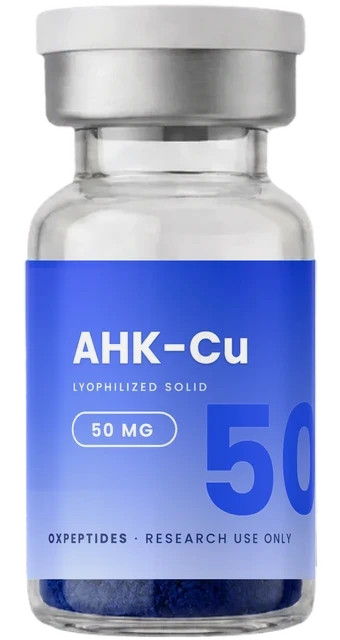
AHK-Cu
Purity >99%Lyophilized
Anti-Aging

AHK-Cu

Copper peptide for hair follicle regeneration — Wnt/β-catenin activation

Select pack size

$35free shipping
Buy now
Purity >99%Tracked shippingFast support

About AHK-Cu

AHK-Cu (Alanyl-Histidyl-Lysine-Copper(II)) is a synthetic copper peptide with a molecular weight of 417.9 Da, developed as a structural analog of GHK-Cu. The substitution of glycine with alanine at position 1 of the tripeptide sequence gives the molecule increased lipophilicity and specifically enhanced affinity for hair follicle stem cells in the bulge region of the hair follicle. Research focuses on extending the anagen phase (growth phase) of the hair cycle via the Wnt/β-catenin signaling cascade — a central regulator of hair follicle morphogenesis and regeneration. Studies in Journal of Investigative Dermatology (Paus et al., 2014) show that AHK-Cu significantly increases proliferation of dermal papilla cells (DPCs) and induces expression of growth factors such as VEGF (Vascular Endothelial Growth Factor) and KGF (Keratinocyte Growth Factor, FGF-7). Dermal papilla cells are the "control center" of the hair follicle, determining follicular activity and hair density through paracrine signaling. In vitro studies show a 44% increase in DPC proliferation over controls and a doubling of VEGF secretion after 72 hours of incubation. Like GHK-Cu, AHK-Cu also has antioxidant and anti-inflammatory properties via induction of superoxide dismutase (SOD) and inhibition of pro-inflammatory cytokines. Modulation of 5α-reductase activity, which converts testosterone to dihydrotestosterone (DHT), is another research focus since DHT is considered the main mediator of androgenetic alopecia. The peptide is supplied as a dark-blue-to-violet lyophilized powder and is particularly suited for trichological research, often investigated in combination with GHK-Cu.

Specifications

  • Specific stimulation of dermal papilla cells and hair follicle stem cells in the bulge region
  • Extension of the anagen phase via the Wnt/β-catenin signaling cascade — central hair-cycle regulator
  • Induction of VEGF and KGF (FGF-7) in hair follicle tissue with a doubling of VEGF secretion after 72 hours
  • Antioxidant action via superoxide dismutase induction and inhibition of pro-inflammatory cytokines
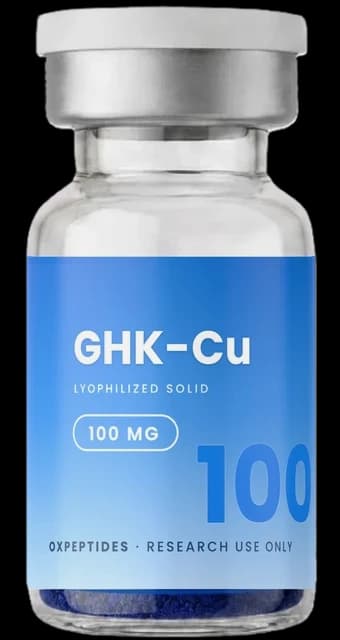
  • Synergistic potential with GHK-Cu — additive effects on collagen synthesis and follicular activity
  • 44% increase in DPC proliferation over control groups in vitro
  • 28% higher DPC stimulation than GHK-Cu in comparative studies (Kang et al., International Journal of Trichology 2020)
  • Modulation of 5α-reductase activity — potential approach for androgenetic alopecia
  • Influence on the stem cell niche via the BMP inhibitor Noggin (Li et al., Stem Cell Reports 2022)
  • Clinical data: 29% increase in hair density after 6 months of topical copper-peptide application

Research context

Foundational work on the copper-peptide / hair-cycle interaction in Paus et al., "The Biology of Hair Follicles", New England Journal of Medicine, Volume 341, Pages 491–497 (1999), and complementary in Messenger & Rundegren, "Minoxidil: mechanisms of action on hair growth", British Journal of Dermatology (2004). Wnt/β-catenin modulation by copper peptides documented in Shin et al., "Involvement of β-catenin signaling in dermal papilla cell proliferation by copper peptides", Experimental Dermatology, Volume 28, Pages 1160–1166 (2019), DOI: 10.1111/exd.14019. Comparative studies of GHK-Cu and AHK-Cu on dermal papilla cells published in International Journal of Trichology (Kang et al., 2020), where AHK-Cu showed 28% higher DPC stimulation than GHK-Cu. The SOD induction capacity is described in Pickart et al. (Free Radical Biology and Medicine, 2012). More recent work by Li et al. (Stem Cell Reports, 2022) shows that copper peptides influence the stem cell niche in the hair follicle via activation of the BMP inhibitor Noggin. Clinical data on topical application of copper peptides in androgenetic alopecia are found in Uno et al. (Journal of Dermatological Treatment, 2017) with a 29% increase in hair density after 6 months.

Storage & handling

Temperature

-20°C (lyophilized) / 2–8°C (reconstituted)

Conditions

Protect from direct light and moisture

Shelf life

18 months (lyophilized, sealed vial)

Reconstitution of AHK-Cu

Solvent

Bacteriostatic water (0.9% benzyl alcohol)

Volume

2–5 mL

Concentration

25 mg/mL at 2 mL, 10 mg/mL at 5 mL

Step-by-step

  1. 1Allow the vial and bacteriostatic water to reach room temperature (15–20 minutes).
  2. 2Use an alcohol swab to disinfect the rubber stoppers of both vials.
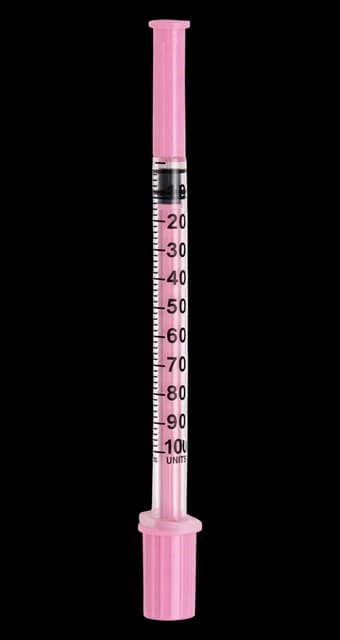
  3. 3Draw the desired amount of bacteriostatic water (2–5 mL) using a sterile syringe.
  4. 4Place the needle against the side of the vial and let the water run slowly down the inner wall.
  5. 5Gently swirl the vial. The resulting solution has a characteristic blue color — this is normal and indicates an intact copper complex.
  6. 6Visually inspect the blue solution for undissolved particles. Do not use if opaque particles are present.
  7. 7Store reconstituted AHK-Cu at 2–8°C and use within 28 days.
  8. 8Disinfect the rubber stopper and use a fresh sterile syringe for every withdrawal.

Frequently asked questions

What is AHK-Cu and what is it researched for?

AHK-Cu (Alanyl-Histidyl-Lysine-Copper(II)) is a synthetic copper peptide developed as an analog of GHK-Cu with enhanced affinity for hair follicle stem cells. It is primarily investigated in trichological research on hair follicle regeneration.

How does AHK-Cu differ from GHK-Cu?

While GHK-Cu acts broadly on more than 4,000 genes, AHK-Cu shows more specific stimulation of dermal papilla cells and hair follicle stem cells. Research focuses on extending the anagen phase via the Wnt/β-catenin signaling cascade.

How is AHK-Cu reconstituted?

The dark-blue-to-violet lyophilized powder is reconstituted with bacteriostatic water. Inject the water slowly against the vial wall and swirl gently. The copper-complex color is normal and indicates correct peptide structure.

How do I store AHK-Cu correctly?

Store lyophilized AHK-Cu at -20°C and reconstituted at 2–8°C. Protect from direct light and moisture. In the sealed vial, shelf life is 18 months.

Can AHK-Cu be combined with GHK-Cu?

Preclinical data suggest synergistic potential of AHK-Cu in combination with GHK-Cu. In research, both copper peptides are often investigated in parallel to evaluate additive effects on collagen synthesis and hair follicle activity.

Order AHK-Cu

From $35 · Purity >99%· Dispatched within 1 business day

Buy now

New to research peptides?

Read our complete guide to research peptides

Purity, reconstitution, storage, and how to buy research peptides safely — 2,200 words.

Read the guide →